Find the workplace food situation closest to what you are managing.
Whether you are setting up recurring meals, supporting multiple shifts, opening a new office, changing the current setup, or dealing with repeated issues, start with the situation that matches your operation.
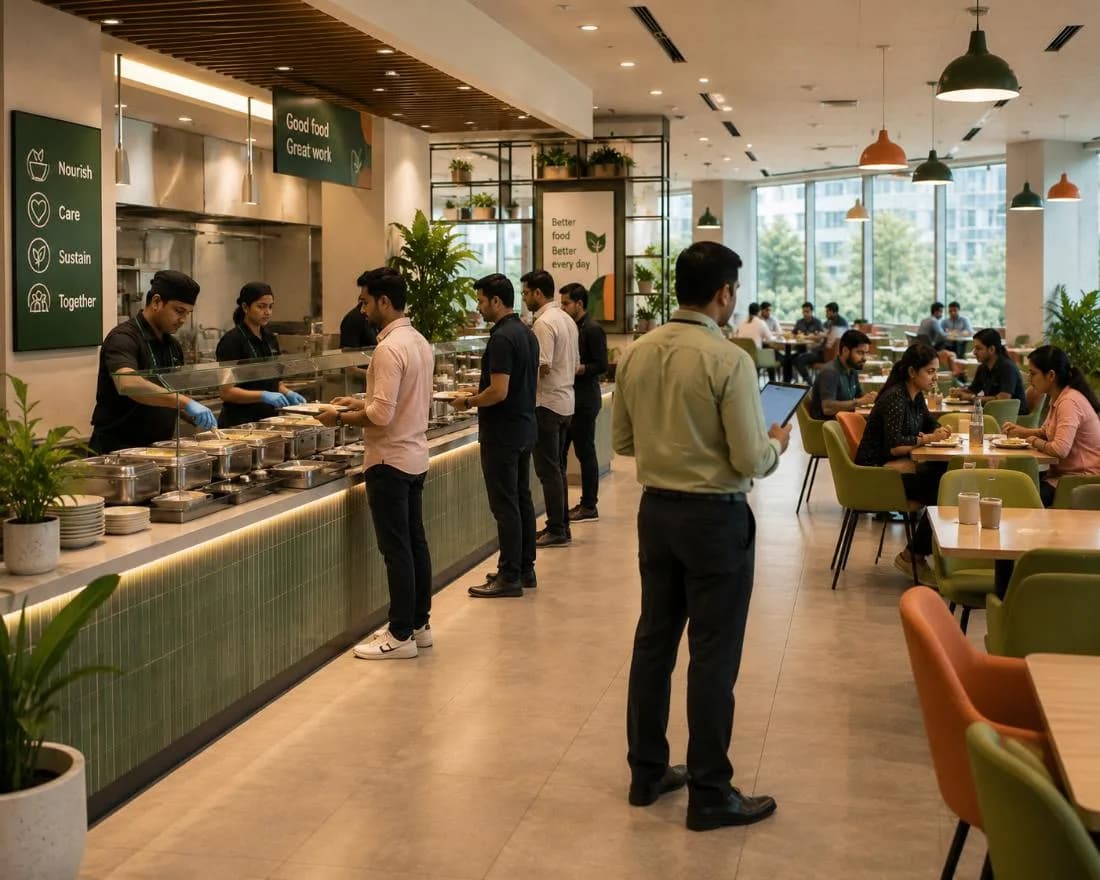
One accountable operating relationship, across every service situation.
Find your situation
What are you managing right now?
Choose the situation that best reflects your current workplace food operation.
 01
01Recurring workplace meals
You run an ongoing breakfast, lunch, snacks, or dinner program.
Explore Recurring workplace meals → 02
02Multi-shift food programs
You need coverage across multiple shifts and extended meal windows.
Explore Multi-shift food programs → 03
03New office / GCC launches
You're planning food operations for a new workplace.
Explore New office / GCC launches →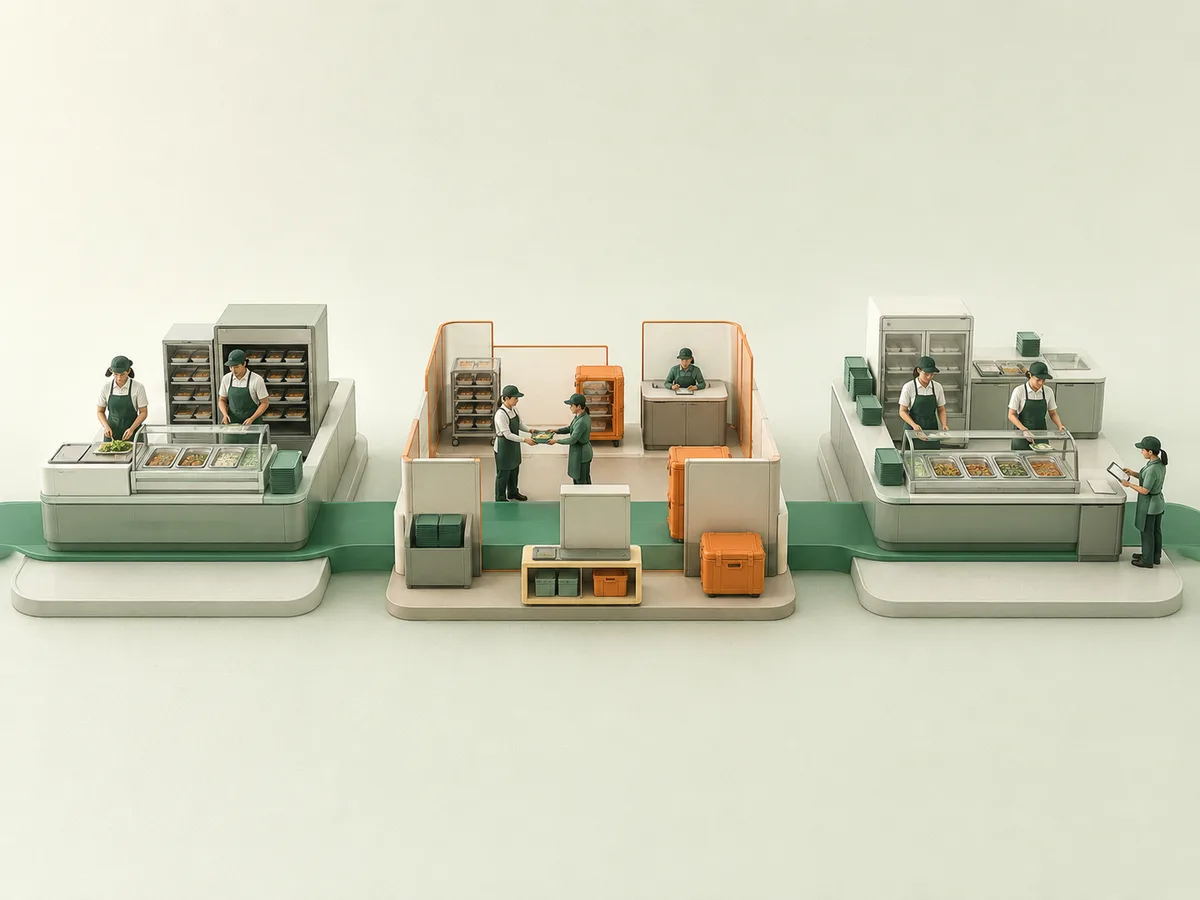 04
04Food-service transitions
You're changing your current food-service setup and need continuity through the switch.
Explore Food-service transitions →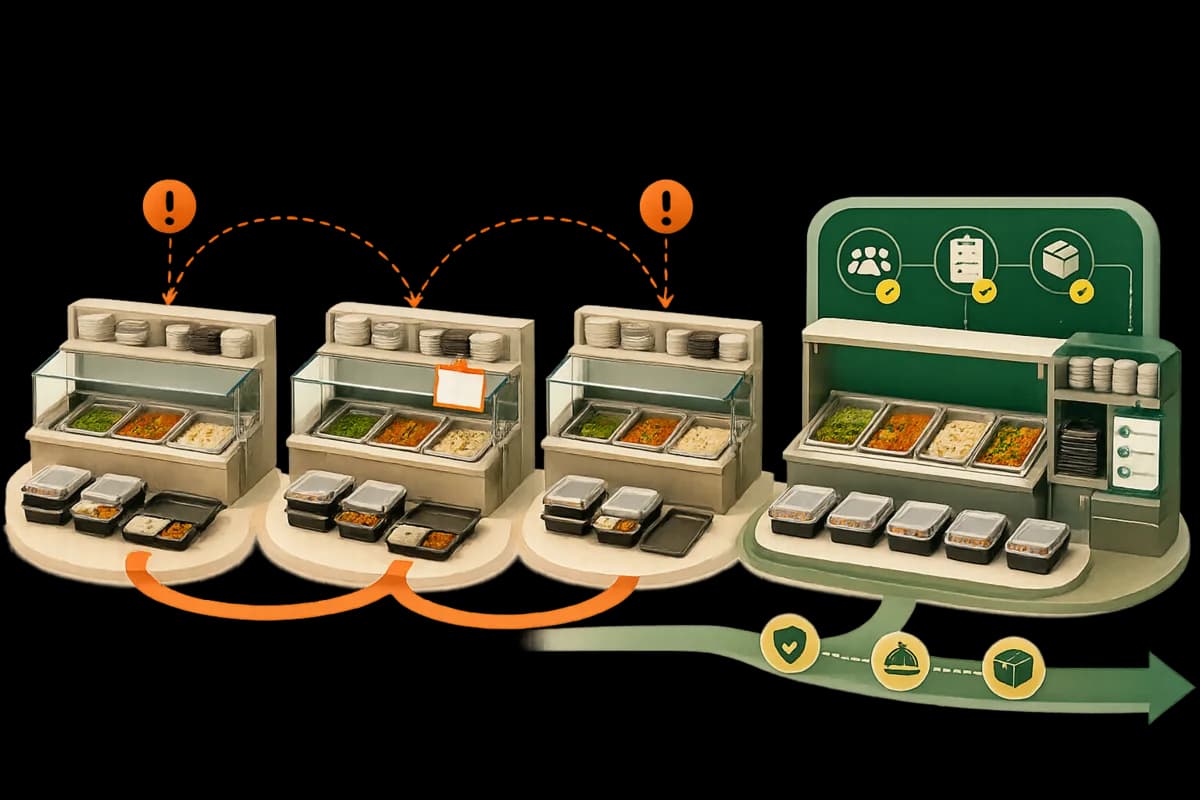 05 / FEATURED SITUATION
Underperforming food operations
You're dealing with repeated complaints and unresolved issues in your current setup.
Root-cause review, corrective action, and — when the same issue keeps returning — a stronger structural response.
Review an Underperforming Operation
Which situation sounds most familiar?
Choose the situation that best reflects your current workplace food operation.
- We need recurring meals to run consistently.Recurring Workplace Meals
- We have multiple shifts or extended service windows.Multi-Shift Food Programs
- We are opening or expanding a workplace.New Office / GCC Launches
- We are changing the current food-service setup.Food-Service Transitions
- The same problems keep returning after temporary fixes.Underperforming Food Operations
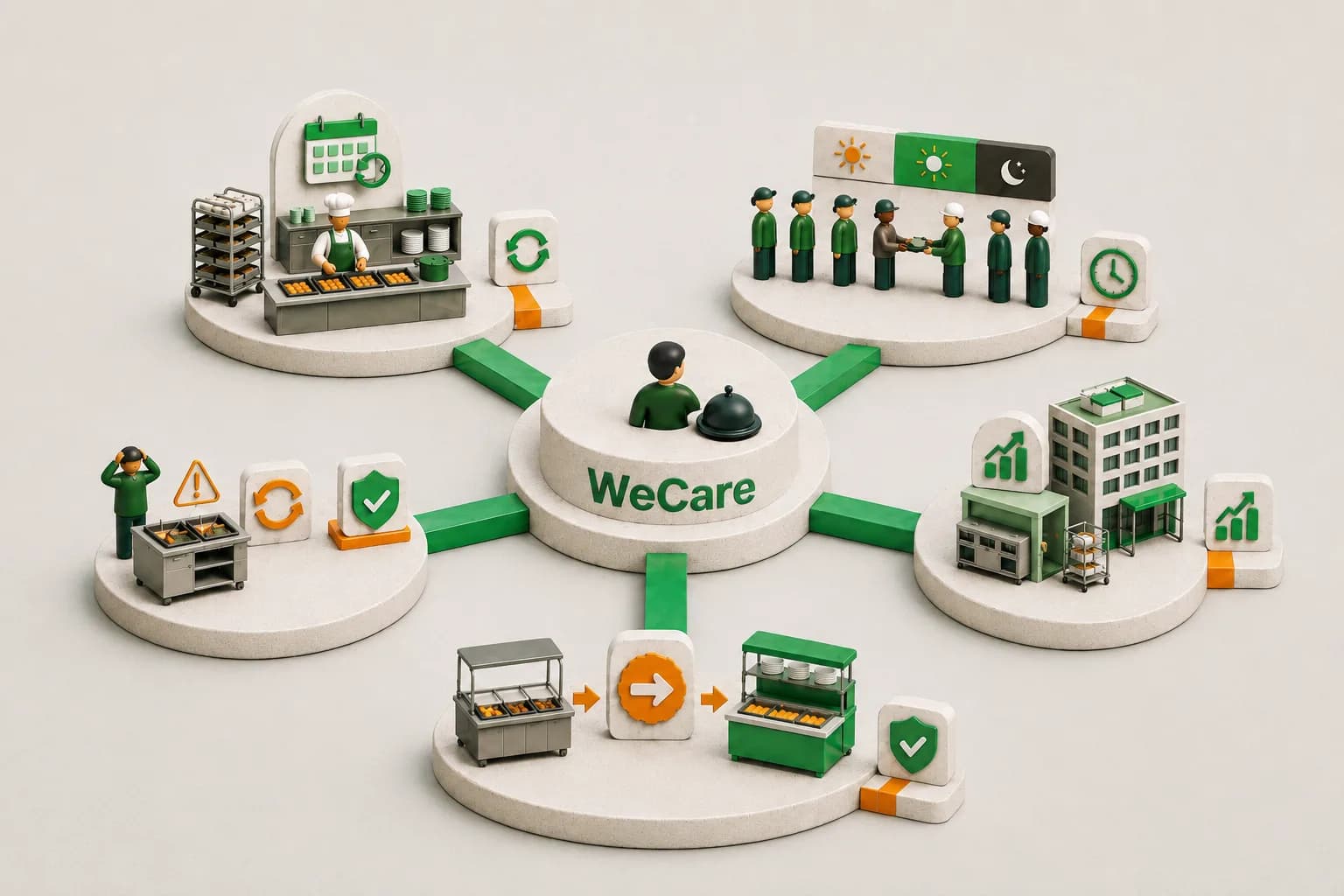
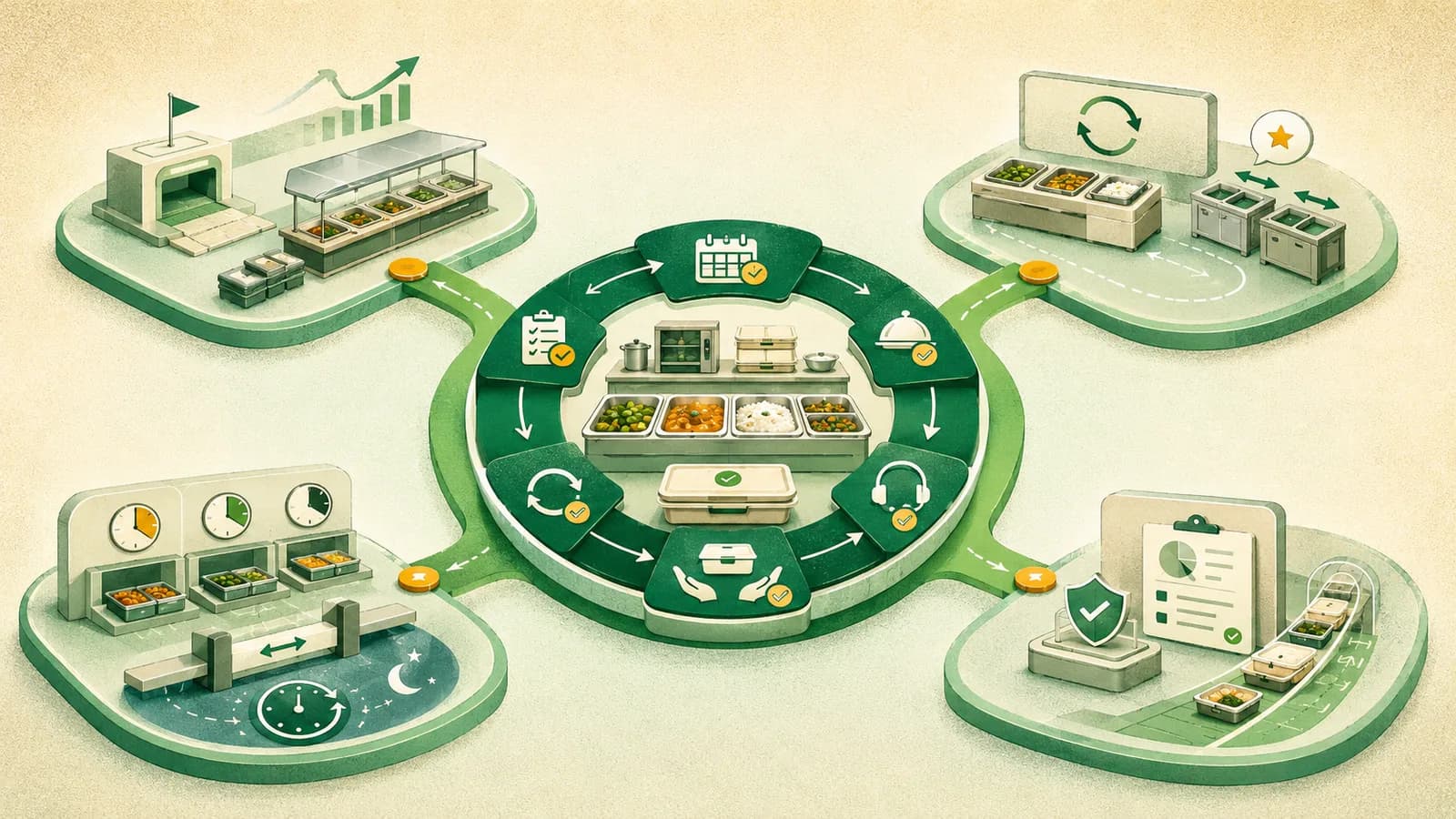
Different situations. One accountable operating model.
The specific response changes by situation, but the operating relationship remains consistent.

- Requirement & fit assessment
- Food operation preparedness
- Service & team alignment
- Ongoing operations
- Issue resolution
- Operational improvement
Not every situation uses every stage with the same intensity. The operating response adapts to the need.
See How WeCare Operates →Compare the five solution paths.
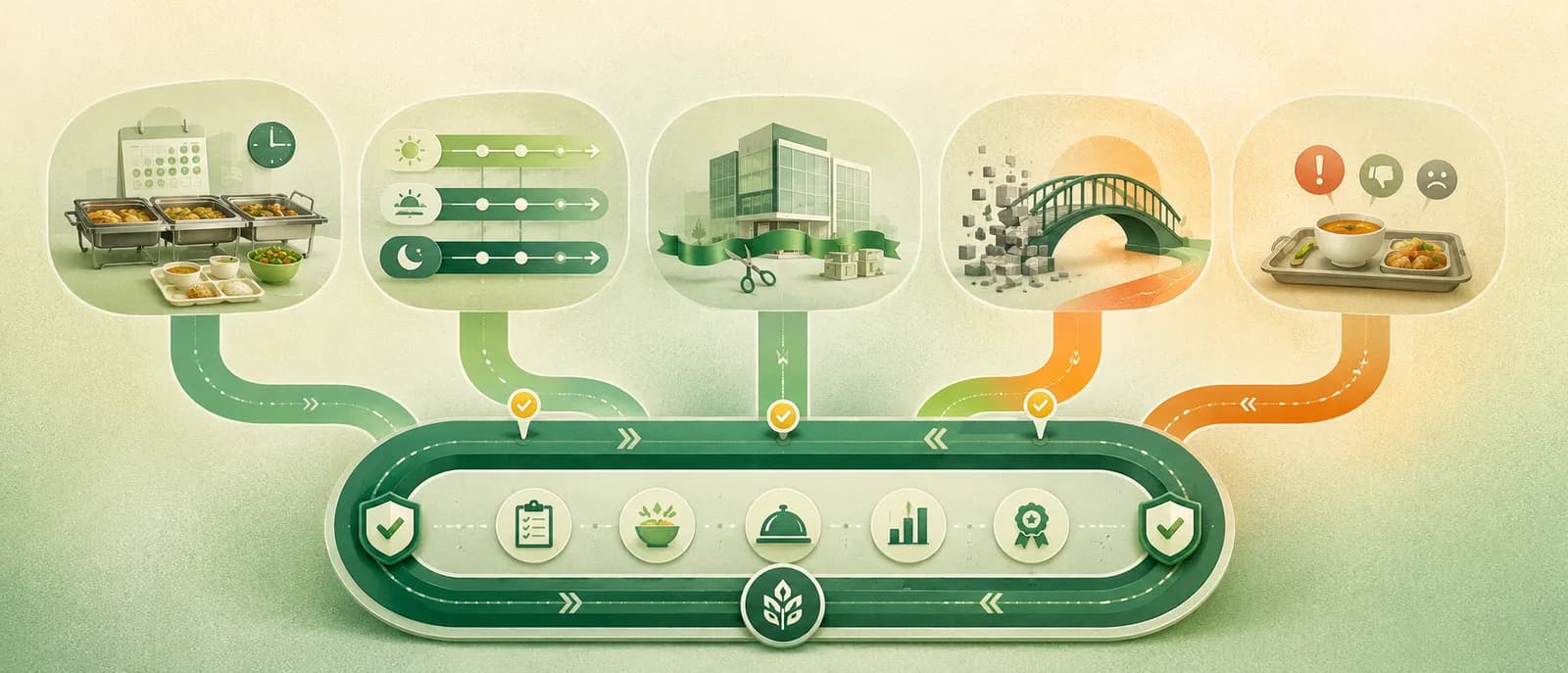
| Recurring workplace meals | Multi-shift food programs | New office / GCC launches | Food-service transitions | Underperforming food operations | |
|---|---|---|---|---|---|
| Typical starting point | Ongoing meal service already running | Coverage needed across multiple shifts | A new office, expansion, or GCC launch being planned | An existing food-service setup that is changing | Repeated complaints or unresolved issues |
| Common operating challenge | Consistency across meal cycles and attendance variation | Shift timing, capacity, and kitchen handovers | Demand validation under an uncertain headcount | Continuity and handover risk during the switch | Root cause behind issues that keep returning |
| Main WeCare focus | Operating alignment and issue resolution | Kitchen readiness and multi-kitchen coordination | Requirement & fit assessment, then kitchen readiness | Kitchen realignment and an operating reset | Issue resolution and, where needed, structural realignment |
| Relevant operating stages | Ongoing Operations, Issue Resolution | Service & Team Alignment, Ongoing Operations | Requirement & Fit Assessment, Food Operation Preparedness | Food Operation Preparedness, Service & Team Alignment | Issue Resolution, Operational Improvement |
| Typical next action | Review current meal cycles and attendance patterns | Walk through shift timings and coverage gaps | Validate headcount and launch timeline | Share the current setup and target switch date | Review the issue history behind the current setup |
- Typical starting point
- Ongoing meal service already running
- Common operating challenge
- Consistency across meal cycles and attendance variation
- Main WeCare focus
- Operating alignment and issue resolution
- Relevant operating stages
- Ongoing Operations, Issue Resolution
- Typical next action
- Review current meal cycles and attendance patterns
- Typical starting point
- Coverage needed across multiple shifts
- Common operating challenge
- Shift timing, capacity, and kitchen handovers
- Main WeCare focus
- Kitchen readiness and multi-kitchen coordination
- Relevant operating stages
- Service & Team Alignment, Ongoing Operations
- Typical next action
- Walk through shift timings and coverage gaps
- Typical starting point
- A new office, expansion, or GCC launch being planned
- Common operating challenge
- Demand validation under an uncertain headcount
- Main WeCare focus
- Requirement & fit assessment, then kitchen readiness
- Relevant operating stages
- Requirement & Fit Assessment, Food Operation Preparedness
- Typical next action
- Validate headcount and launch timeline
- Typical starting point
- An existing food-service setup that is changing
- Common operating challenge
- Continuity and handover risk during the switch
- Main WeCare focus
- Kitchen realignment and an operating reset
- Relevant operating stages
- Food Operation Preparedness, Service & Team Alignment
- Typical next action
- Share the current setup and target switch date
- Typical starting point
- Repeated complaints or unresolved issues
- Common operating challenge
- Root cause behind issues that keep returning
- Main WeCare focus
- Issue resolution and, where needed, structural realignment
- Relevant operating stages
- Issue Resolution, Operational Improvement
- Typical next action
- Review the issue history behind the current setup
Not sure which solution fits your current setup?
Some workplace food requirements overlap. Start with the challenge creating the most work, and WeCare can help clarify the right route.
- Describe your current requirement.
- Describe what isn't working.
- Describe what's changing.
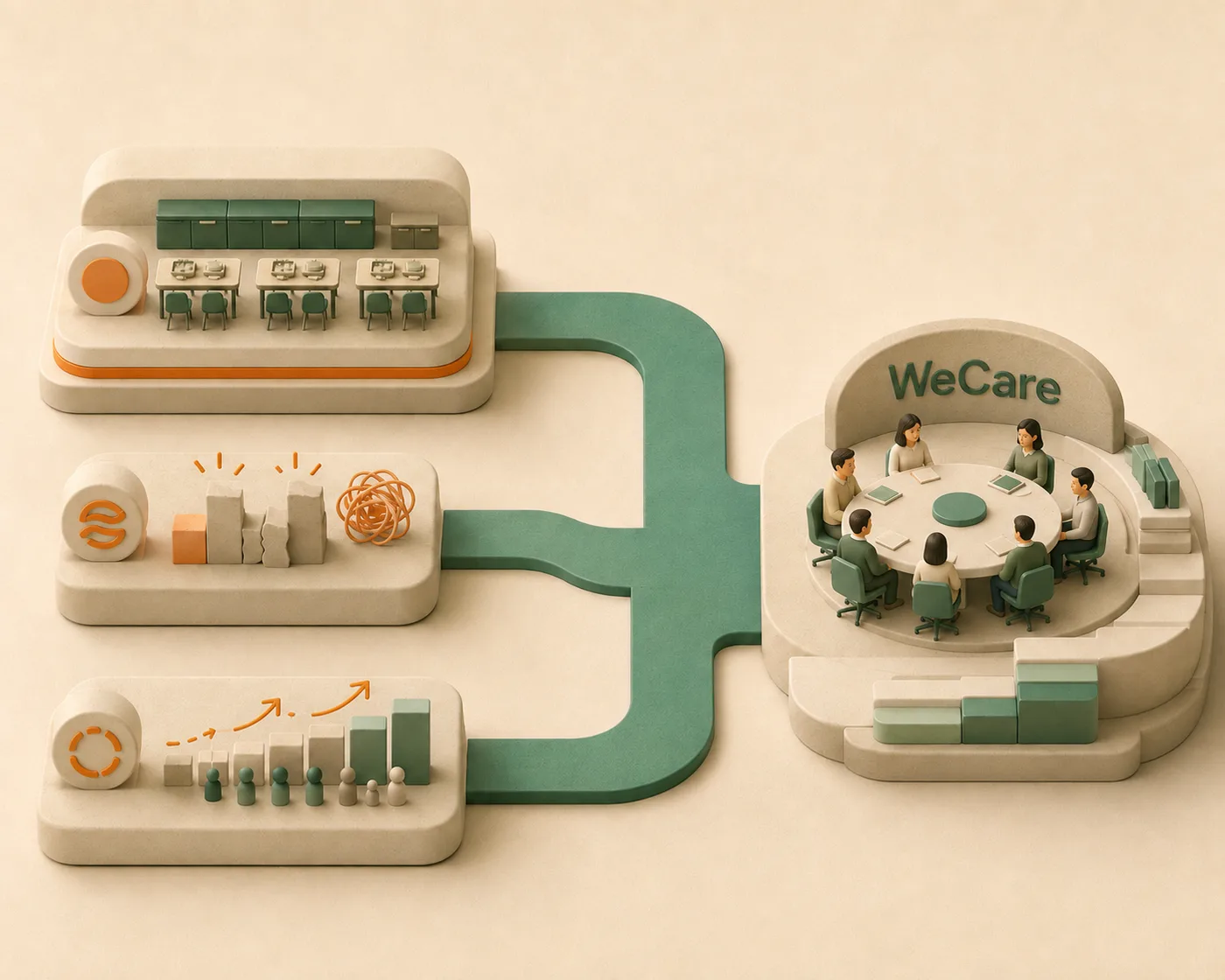
See how the solutions apply to your workplace environment.

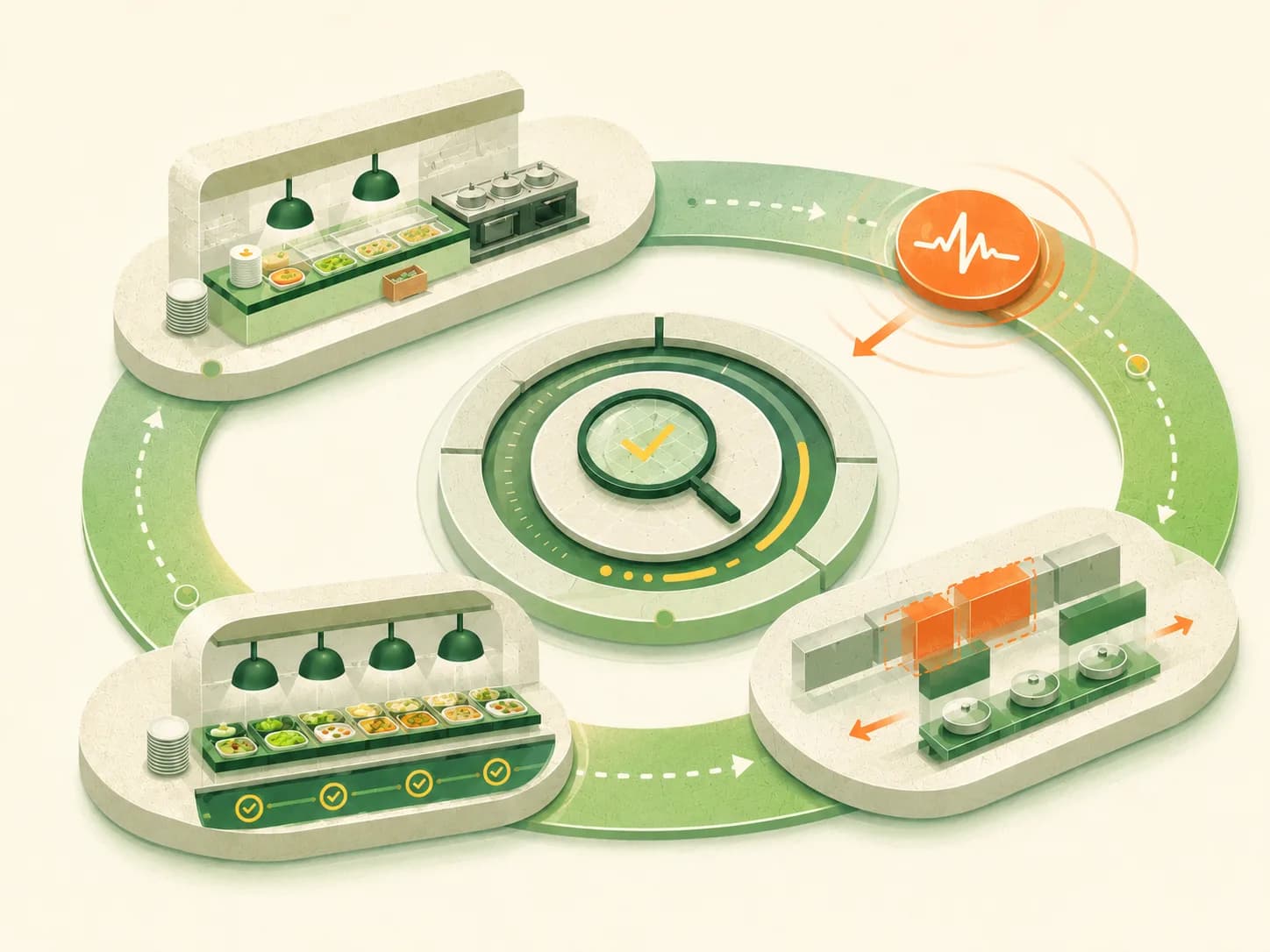

Which workplace food situation are you trying to stabilize?
Start with the current requirement, transition, or recurring issue. A finalized brief is not required.