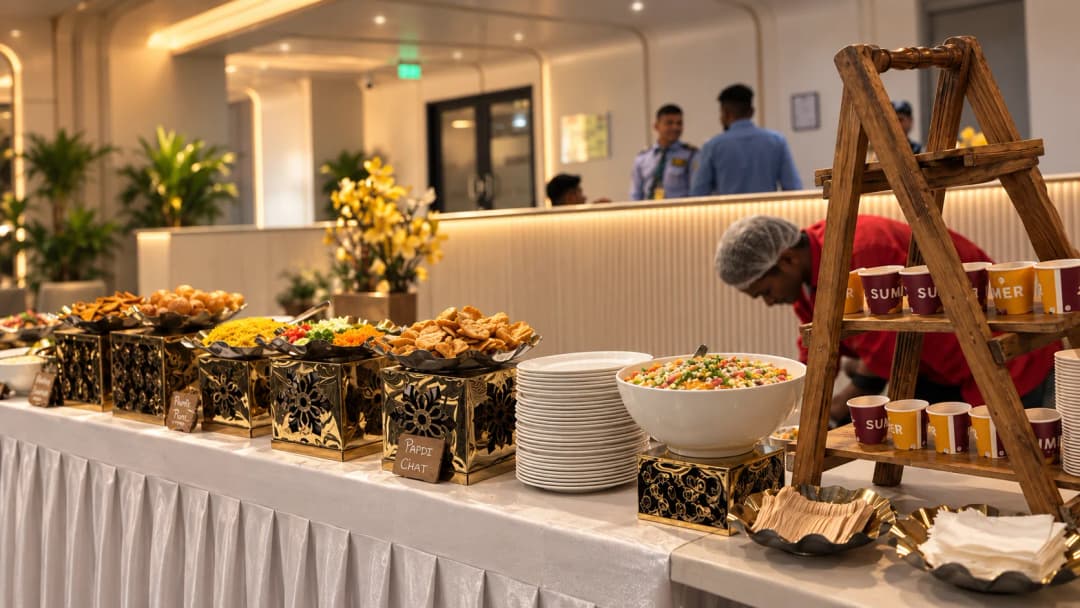
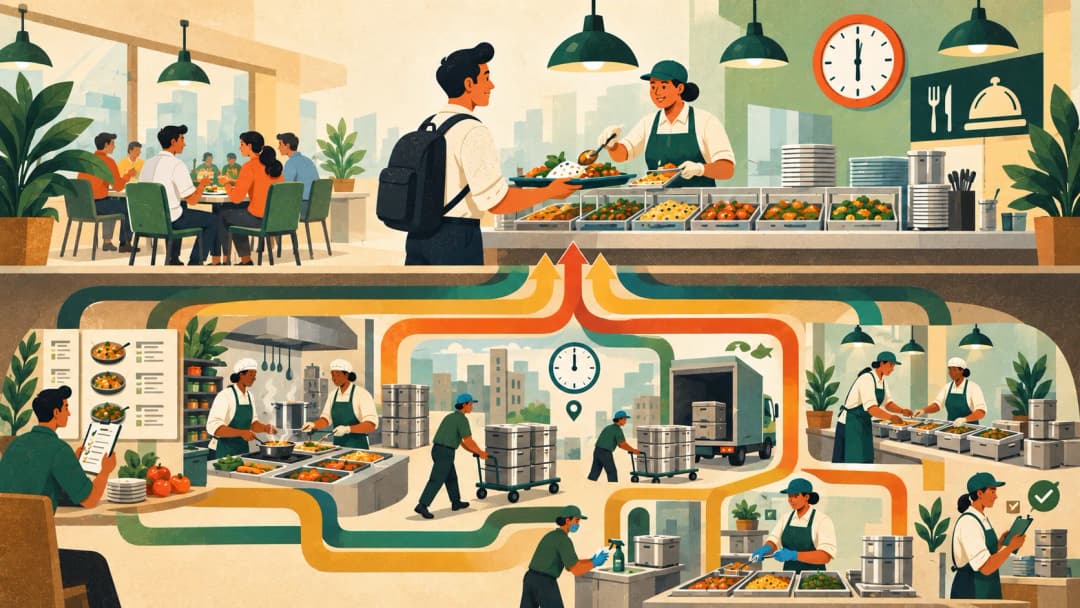
Since 2022, WeCare has provided Lifesight's weekly lunches and event food services at its Bengaluru office. The programme combines regional and international menus with selected live preparations, supported by a nearby WeCare-managed kitchen, advance setup planning, consumption-based quantity adjustments and regular feedback review.
WeCare reports improved timing, quality, quantity planning and cuisine variety across the engagement1 — the underlying before/after records remain to be confirmed.
Objective
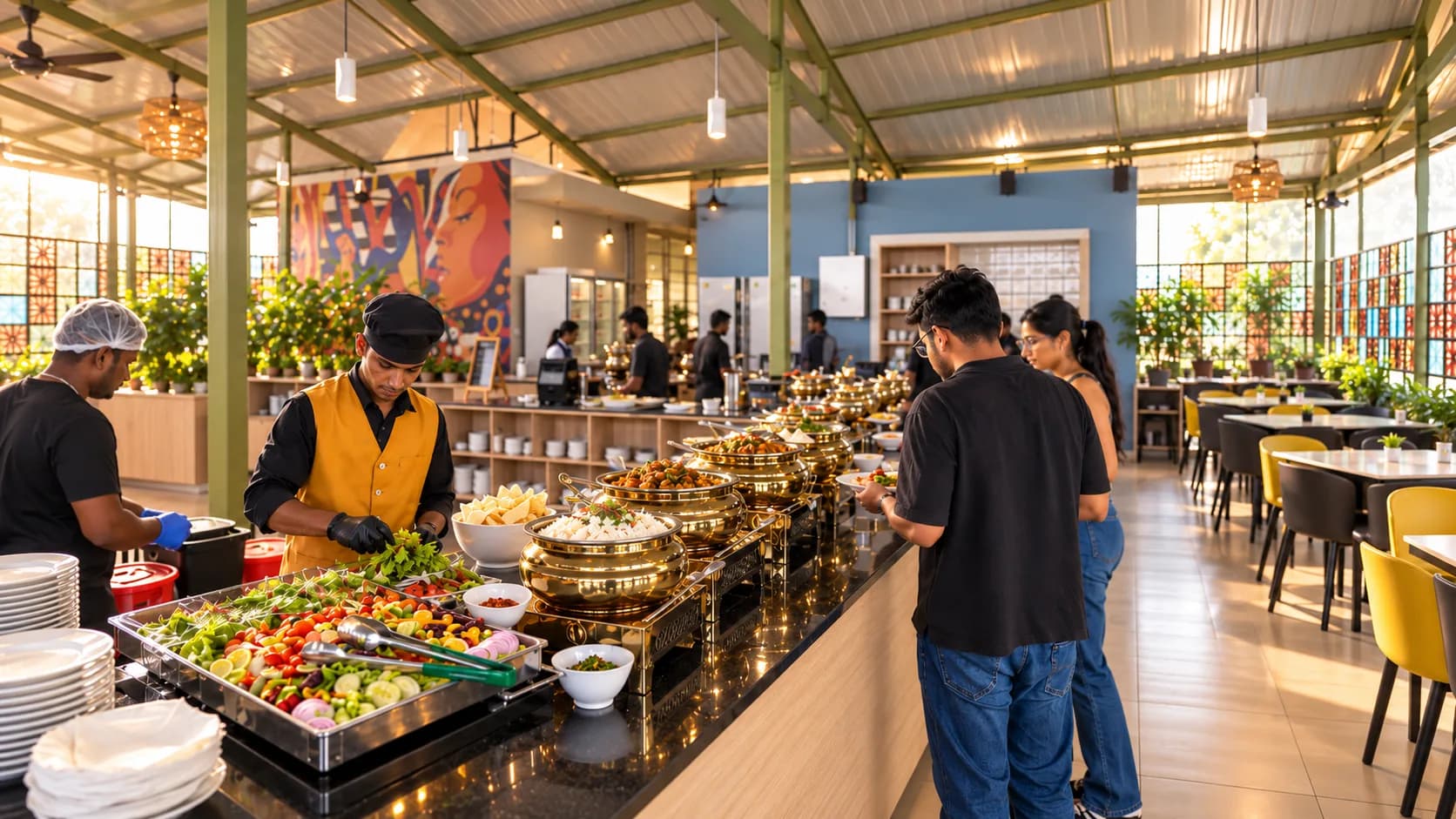
Offer Lifesight's employees a more varied recurring lunch experience while addressing the workplace's concerns about timing, food quality, quantities and consistency.
Challenges
- Lifesight previously ordered food from different restaurants and caterers and reported concerns about timing, quality and consistency.
- Food quantities needed to reflect actual employee consumption.
- Different employee preferences called for greater cuisine variety.
- Live preparation and changing menus added requirements for transport, staffing and counter readiness.
Results
The following are reported operating facts and practices, not independently verified outcome metrics.
- Since 2022: WeCare has served weekly lunches and event lunches/snacks at Lifesight.1
- Approximately 2–3 times monthly: Selected lunch services include live food preparation.2
- T−30 minutes: The team targets completion of food setup 30 minutes before service; actual adherence is unverified.3
- Approximately 5–7 km: Reported distance from the WeCare-managed kitchen to the office; this is an operating input, not a result.4
WeCare reports better timing, quality, quantity planning, variety, participation and fewer recurring complaints; these outcomes are pending dated before/after records and Lifesight's confirmation.
Overview
At Lifesight's standalone office in HSR Layout, a lunch must satisfy two sets of requirements.
- Encounter the food and the changing weekly menu
- Experience the live-preparation counter on selected days
- Need the lunch to arrive, be set up and be served as planned
- Need consistency across changing cuisines and live-counter days
The previous arrangement relied on orders from multiple restaurants and caterers. Lifesight reported difficulties with timing, food quality, quantity, variety and consistency. WeCare's approach brings preparation, transport and workplace service into one internally managed operation.
When variety becomes an operating challenge
A Bengali lunch one week; Tamil, Punjabi or another regional cuisine on a later service. On selected days, part of the food is prepared live at the workplace. These changes create a different experience at the counter — but also different preparation, equipment, quantity and staffing needs behind it.
The issue was not just choosing new dishes. Each menu had to fit the service window and the needs of the employees expected to attend. The account team's recurring task is to keep the dining experience varied without treating readiness as an afterthought.
Why workplace dining needs more than a menu
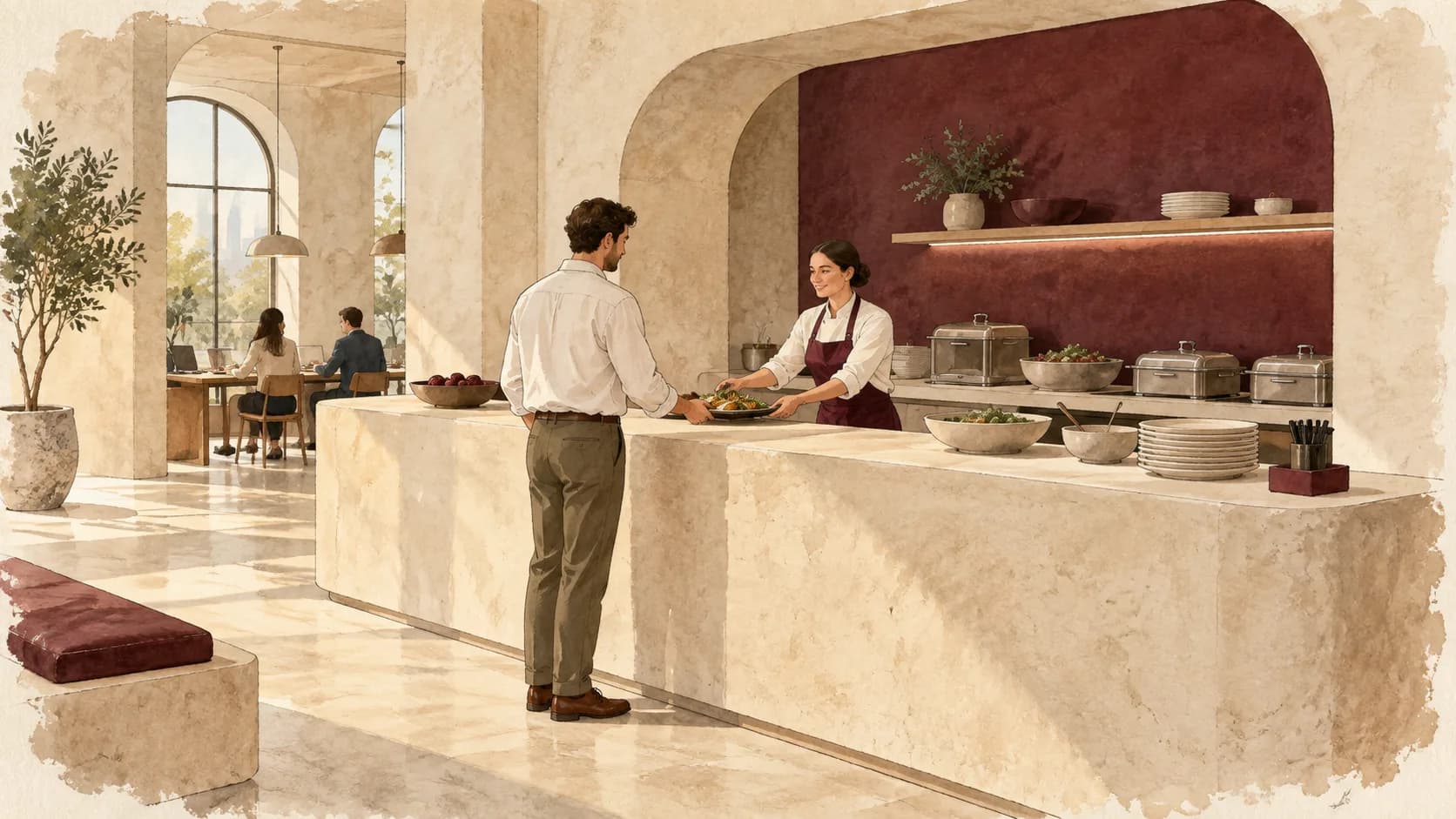
Food service also requires sound handling and transport practices. FSSAI's catering inspection checklist covers transportation conditions, food temperature and cleanliness; it does not establish that any specific Lifesight delivery met those requirements. [2]
What WeCare changed
1. Plan readiness before the lunch window
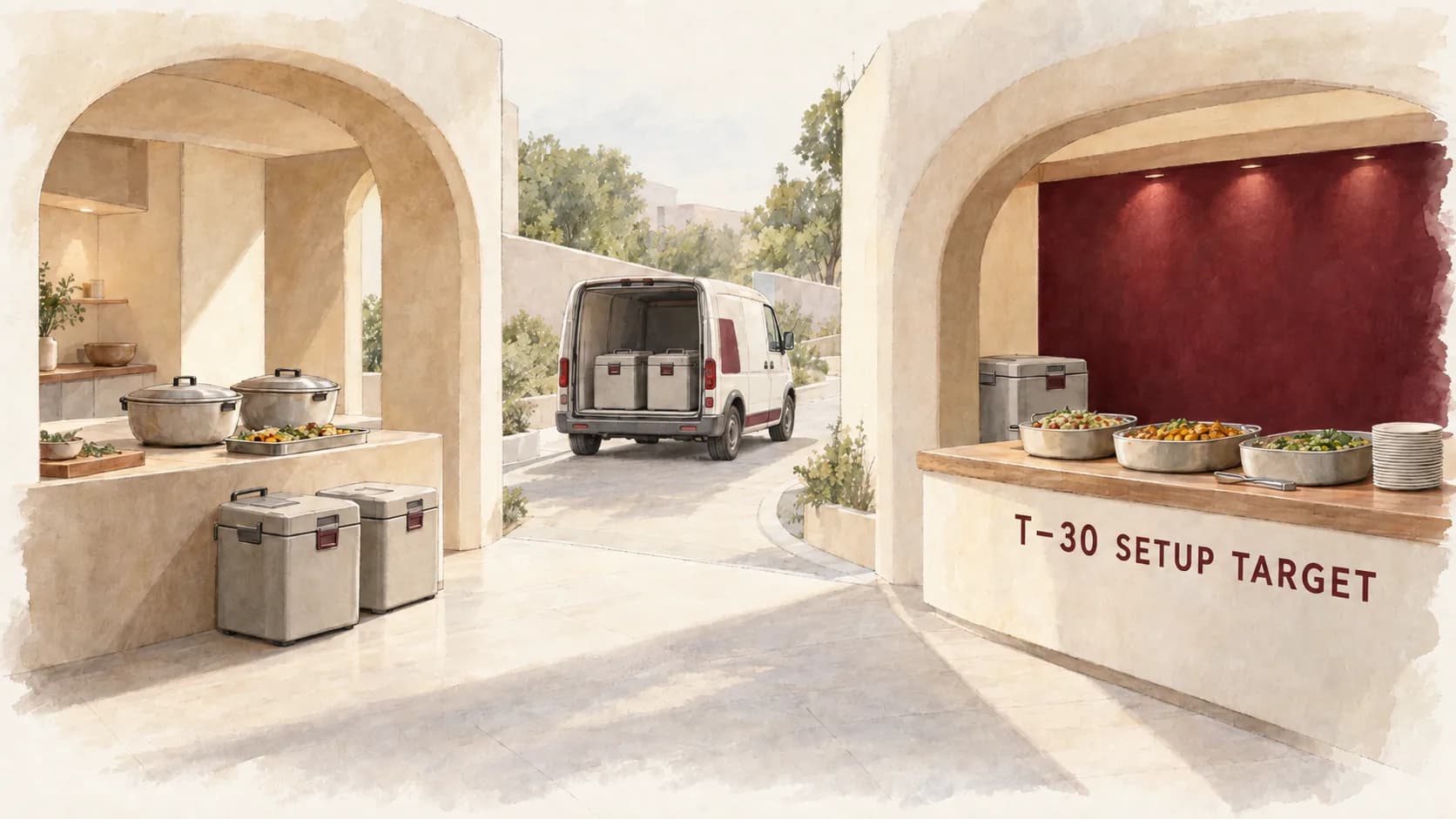
WeCare's managed kitchen is reportedly about 5–7 km from Lifesight, with access to relatively low-traffic routes. The team uses insulated food carriers and plans to complete setup 30 minutes before service. It also reports allocating roughly 1.5 times the usual setup staffing for faster counter preparation. These are reported methods and targets; recorded arrival times, temperatures and staffing rosters are still needed.345
2. Change the cuisine, not the service discipline
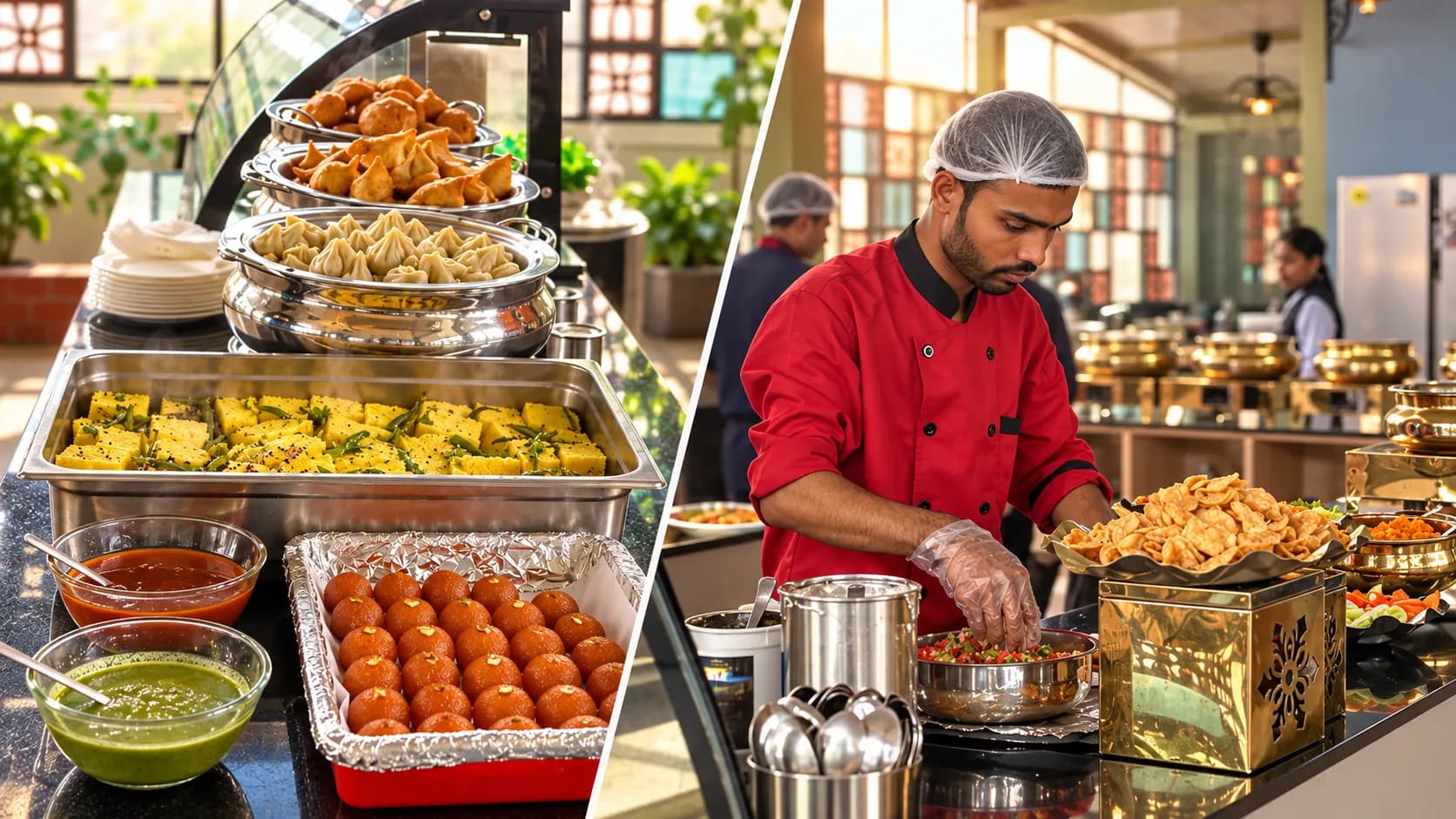
WeCare introduced cuisine-themed lunches featuring Bengali, Rajasthani, Tamil, Andhra, Marathi and Punjabi food, alongside Continental, Pan-Asian and Mexican options. Selected lunches include live preparation of individual dishes on site. WeCare reports doing this approximately two or three times a month; the exact monthly schedule remains to be checked.2
3. Let one lunch inform the next
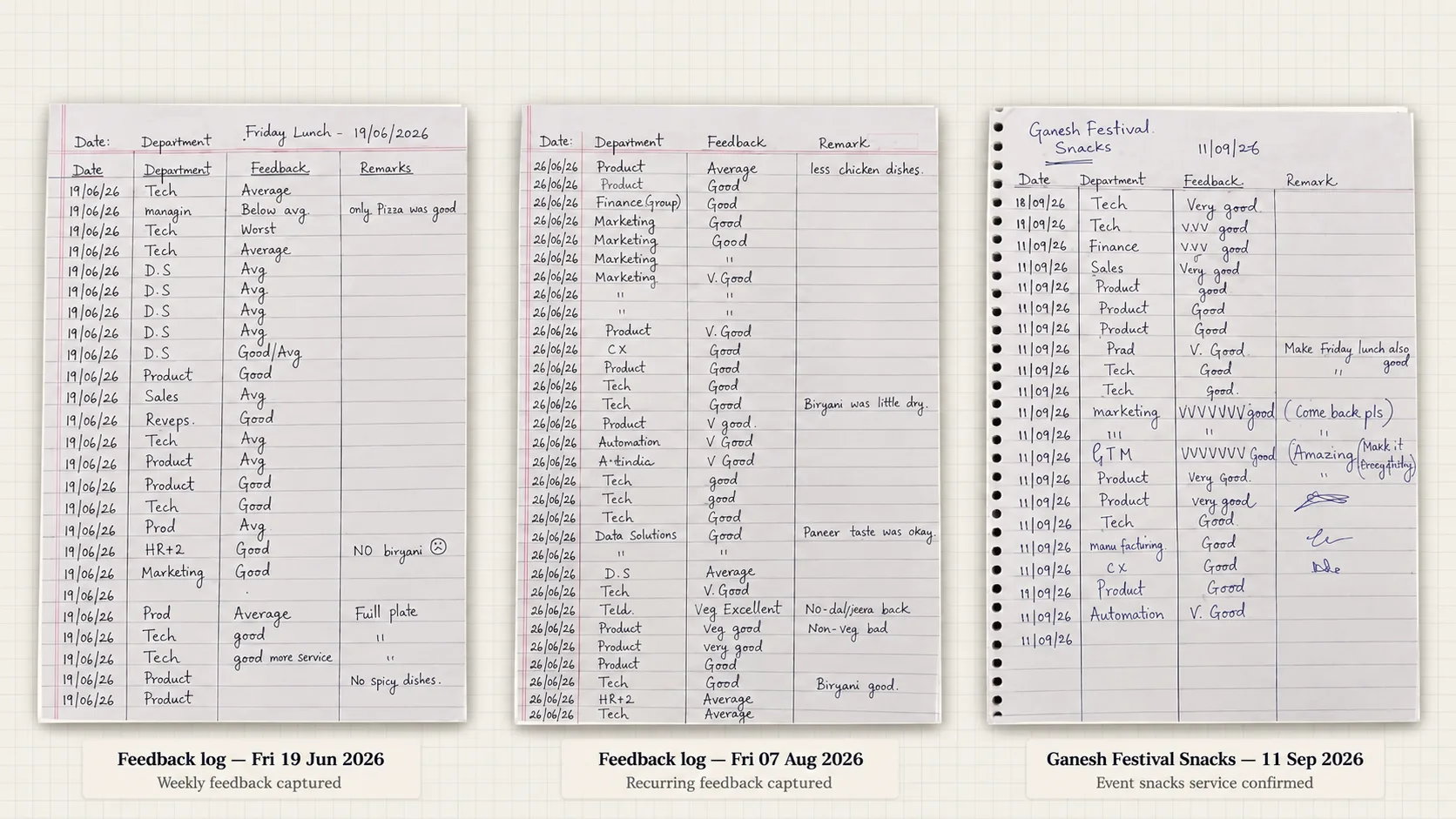
The team studies how much food employees consume and uses that information to plan subsequent quantities. It also records employee and client feedback and reports incorporating relevant changes into the following week's menu and service planning.
This is a described planning practice, not yet proof of reduced waste, higher satisfaction or the elimination of shortages. A dated feedback-to-menu example would make the mechanism tangible.

What changed in practice
How we verified it
This draft draws on WeCare's account description of its Lifesight engagement. Dated internal feedback logs — reviewed for this draft — support the recurring weekly-lunch cadence described under Results and the feedback-collection practice described under "Let one lunch inform the next." The precise service start date, live-counter frequency, T−30 adherence and before/after outcome figures remain open.
What we'd carry forward
Cuisine variety is easier to sustain when menu decisions and service preparation are planned together. At Lifesight, the reported combination of advance setup, live-counter planning, consumption review and feedback offers a practical way to organise recurring lunches around different employee needs.
Changing the menu is visible. Preparing the operation for that change is what makes the lunch possible.
Outcomes
Since 2022, WeCare has continued supplying Lifesight's weekly lunches and event food services. The current approach includes rotating cuisines, selected live preparation, consumption-informed quantity planning and an advance setup target. WeCare reports improvement across the original concerns, but the size of those improvements remains unverified.
- Food ordered from different restaurants and caterers
- Reported concerns about timing, quality, quantity and variety
- WeCare-managed kitchen, transport and workplace service
- Cuisine rotation, live preparation and consumption-informed planning
- Advance setup target and next-week feedback review
Lifesight has also discussed expanding WeCare's scope to regular subsidised lunches. Because meal counts are uncertain and initial demand is low, feasibility is under assessment; this is not a completed WeCare service. The existing engagement shows how cuisine choice and operational planning can be managed together, while measured outcome claims await supporting evidence.
Common questions
How does WeCare plan different cuisines for Lifesight? It plans regional and international menu rotations and selected live preparations, then uses observed consumption and feedback to inform future services.
How does food arrive ready for lunch? A WeCare-managed kitchen approximately 5–7 km away supports planned dispatch. Insulated carriers, additional setup staffing and a T−30 readiness target are part of the reported process; actual timing and temperatures need records.
How often does Lifesight receive live counters? WeCare reports live preparation on approximately two or three occasions per month. Dated service schedules are pending verification.
Does WeCare provide Lifesight's regular subsidised lunch? Not within the currently confirmed WeCare service scope. The parties are assessing whether uncertain and relatively low meal counts allow a feasible expansion.
Notes on the numbers
- Engagement since 2022 — WeCare account information. Exact start date, continuity and current service schedule are pending confirmation. Source: WeCare account information, September 2026.
- 2–3 live-counter services per month — WeCare account information. Reconcile against the separately reported 50–75% target and confirm which lunch-service days are counted; pending monthly menu and service logs. Source: WeCare account information, September 2026.
- T−30 — A service-readiness target, not verified actual adherence; pending delivery and setup timestamps. Source: WeCare account information, September 2026.
- 5–7 km — Approximate stated kitchen-to-office distance and route characteristics; pending confirmation of the operating kitchen and route. Source: WeCare account information, September 2026.
- 1.5× setup staffing — Reported allocation relative to usual staffing; baseline, actual roster and service scope pending confirmation. Source: WeCare account information, September 2026.
Sources
- CBRE — 2025 India Office Occupier Survey, 9 September 2025. cbre.co.in
- FSSAI — catering inspection checklist, included with its 3 April 2025 inspection-material update. fssai.gov.in
Figures marked 1–5 above are WeCare operational data — see Notes on the numbers. The bracketed references [1] and [2] are the external sources listed here.