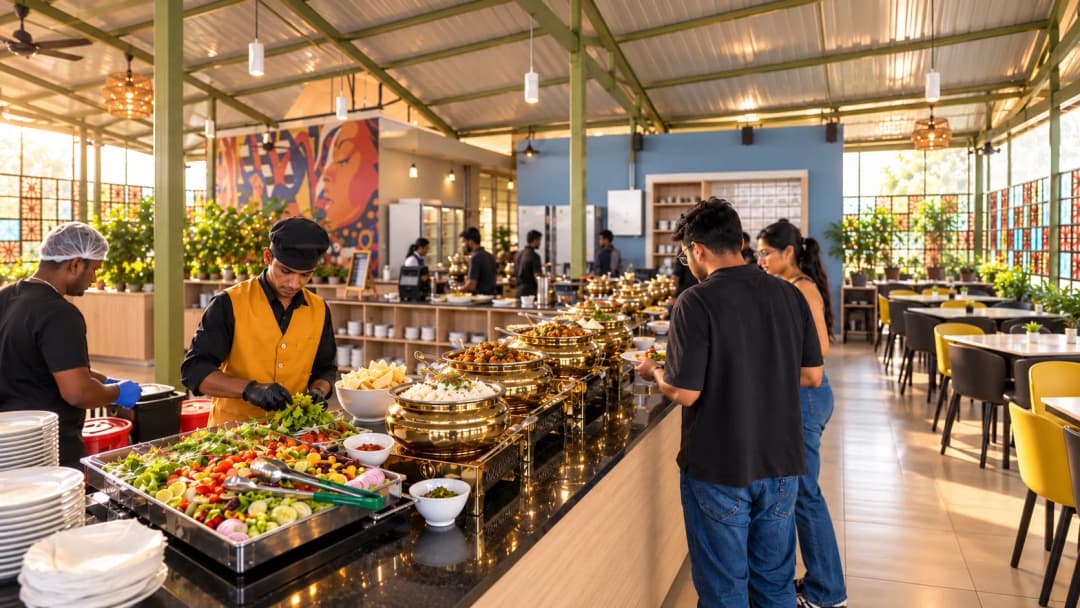
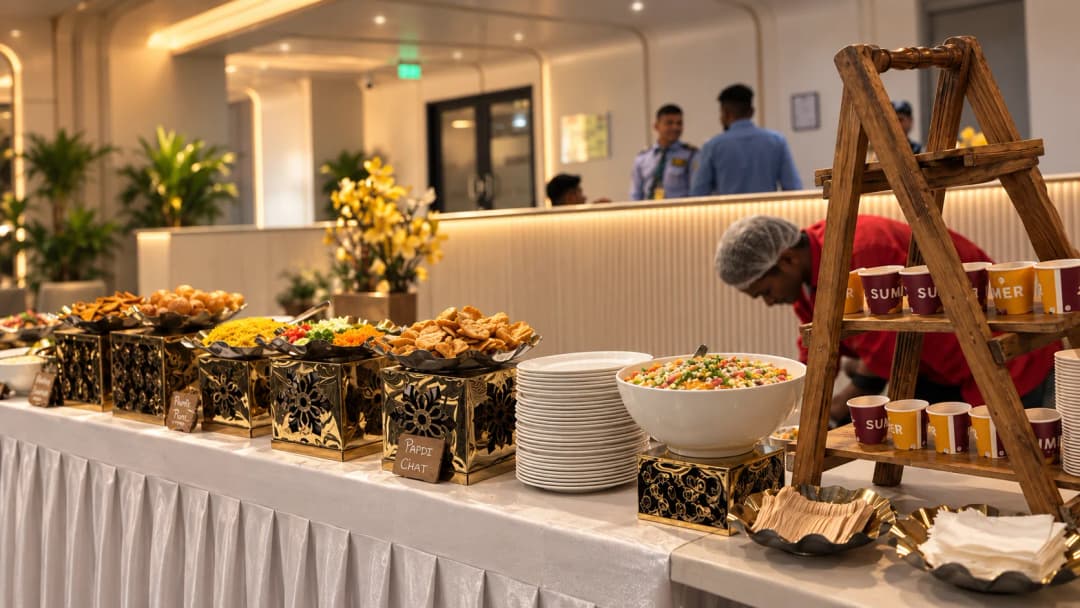
At NetCracker's Bengaluru workplace, WeCare reworked the operating discipline behind the office cafeteria and tuck shop — from menu planning and trained service staff to a T-30 lunch-readiness process.
Across more than 200 operating days, WeCare reports only one delayed lunch service, alongside stronger reported lunch sales and positive Facility-team feedback.
Objective
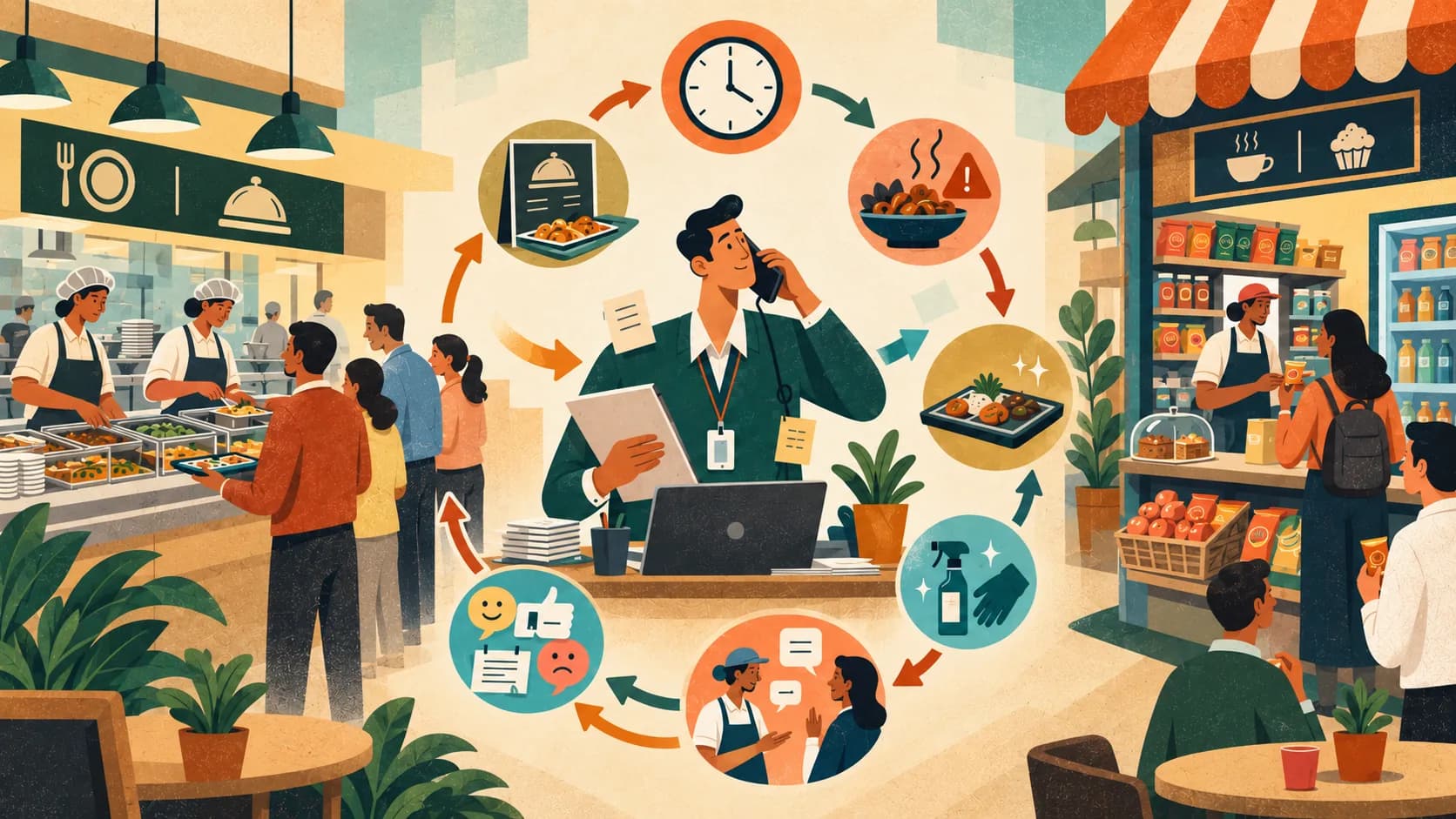
Make NetCracker's everyday workplace-food operation more reliable while improving menu variety, food quality, presentation, service standards and employee experience.
Challenges
- Lunch service did not consistently start on time.
- Food quality and menu variety were inconsistent.
- Employee food feedback was not being addressed adequately.
- The tuck shop had irregular timing and menu availability.
- Presentation, hygiene and service behaviour needed improvement.
- Tuck-shop sales were lower than expected.
Results
- 1 reported lunch delay across 200+ operating days.1
- Reported lunch sales moved from ₹4,000–5,000 to ₹7,000–8,000 per day.2
- Tuck-shop sales reached up to ₹2,500 per day, against an earlier reported ₹300–500 range.3
- Positive feedback was followed by discussions about extending WeCare's service to another NetCracker site.4
“[[VERIFY: testimonial from NetCracker Facility Director]]”
The problem was bigger than a late lunch
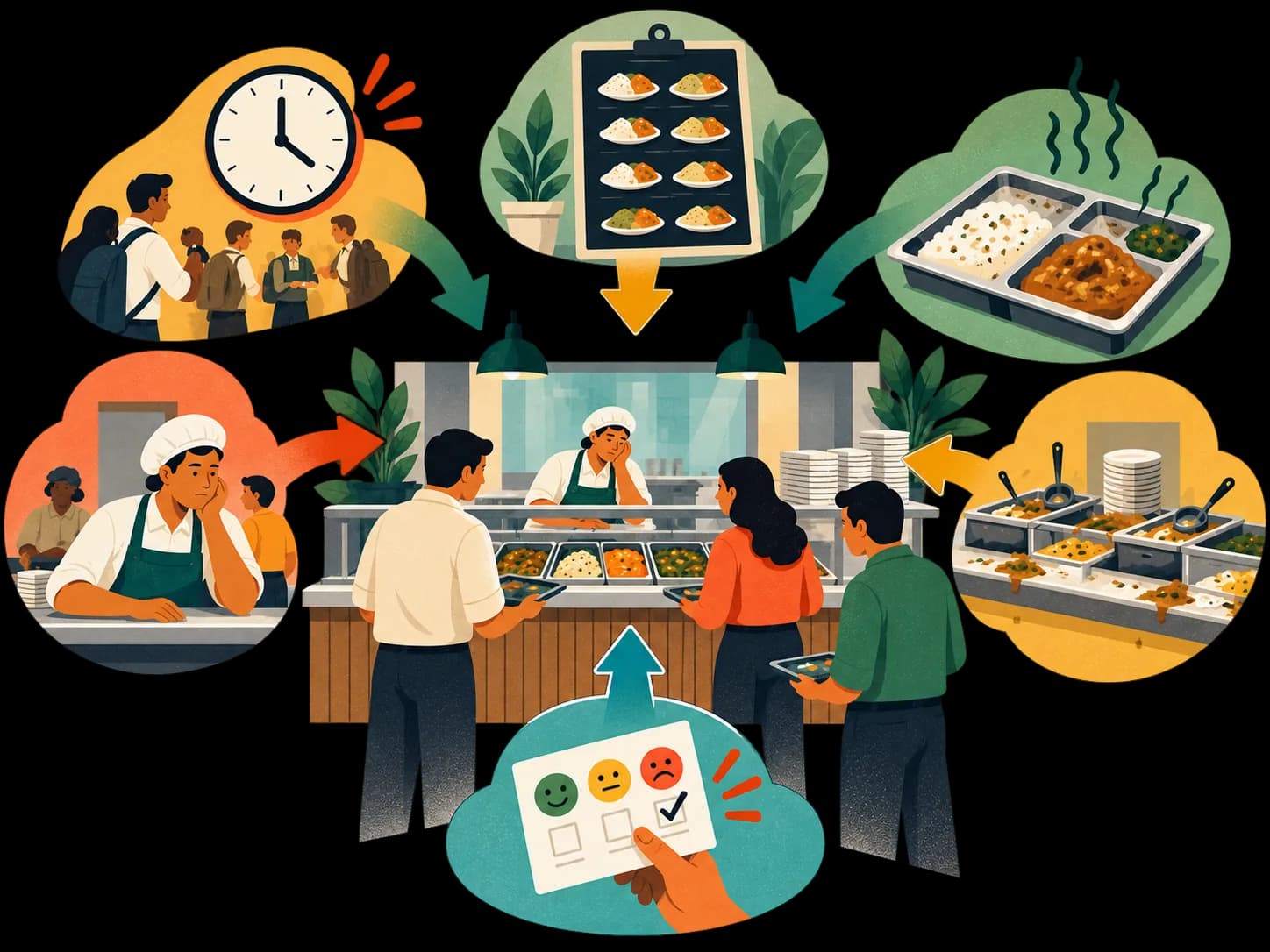
NetCracker ran two workplace-food services, and employees could not always expect the same experience from either one on a given day.
- Inconsistent start times
- Inconsistent food quality
- A narrow menu that rarely changed
- Feedback that went nowhere
- Irregular timing and availability
- Poor presentation and hygiene concerns
- Inconsistent food quality
- Service behaviour that put people off
Lower tuck-shop sales were one visible symptom. But changing the assortment alone would not fix an operating problem spanning timing, menu, quality, presentation, staff and feedback.
Why office-food reliability matters
Workplace attendance has strengthened across India. CBRE's 2025 India Office Occupier Survey found that 94% of surveyed occupiers preferred employees to work from the office at least three days per week, while 55% reported average office utilisation above 75%. [1]
Bengaluru remains at the centre of enterprise-office growth. Colliers reported that the city led India's major office markets in H1 2026 with 10.5 million sq ft of leasing and a 29% share. [2] Colliers also reported that Bengaluru and Hyderabad together have accounted for more than 60% of GCC leasing since 2021, reinforcing the concentration of large enterprise workplaces in these markets. [3]
The implication for a Facility team is simple: timing, food quality, hygiene, feedback and continuity are not separate problems. They are parts of the same daily operation.
Reliability had to start before 12:30
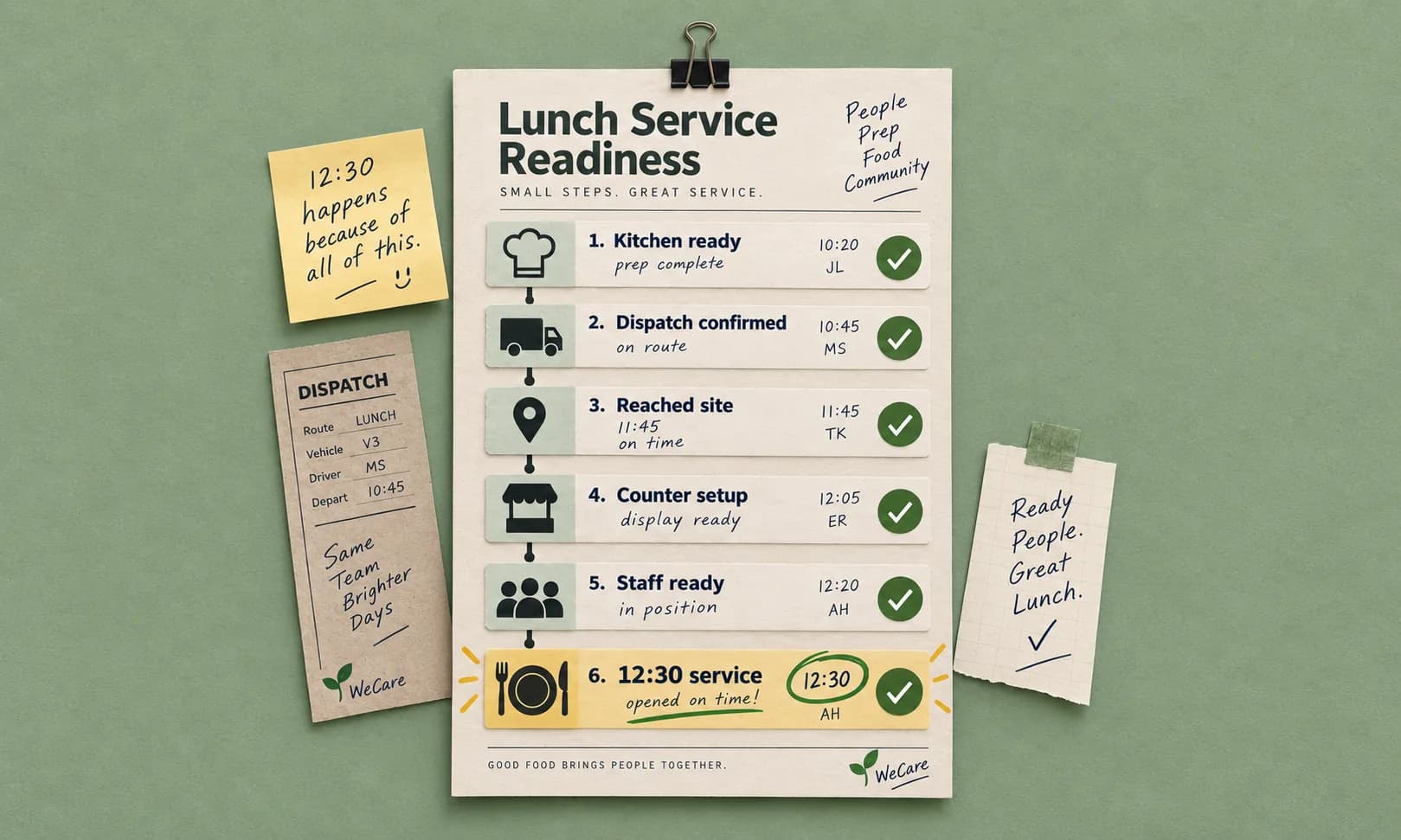
WeCare rebuilt the operation around one idea: the counter has to be ready before employees arrive. The most important timing change was T-30 readiness — food reaches the workplace about 30 minutes before the 12:30 PM window, leaving time to unload, set up and present.
- 01Studied the site, aligned SLAs
The first two weeks went to understanding the operation and agreeing service expectations.
- 02Rebuilt the lunch menu
Broader variety, different cuisines and non-vegetarian options every day, with stronger food-presentation standards.
- 03Introduced T-30 readiness
Food planned to reach the counter 30 minutes before service, so setup finishes before the queue starts.
- 04Trained the service team
Professional uniforms, plus behavioural, service and food-presentation training.
- 05Rebuilt the tuck shop
New setup and presentation, trained staff, and a wider assortment — quick bites, sandwiches, juices, healthier choices.
The intervention therefore connected preparedness, timing, assortment, presentation and service behaviour rather than treating each issue separately.

How we verified it
Across 200+ operating days, WeCare reports only one delayed lunch service after introducing the new readiness process.1
Reported lunch sales also moved from approximately ₹4,000–5,000 to ₹7,000–8,000 per day.2 Tuck-shop sales showed improvement as well, although the complete post-intervention range still needs confirmation.3
What changed in practice
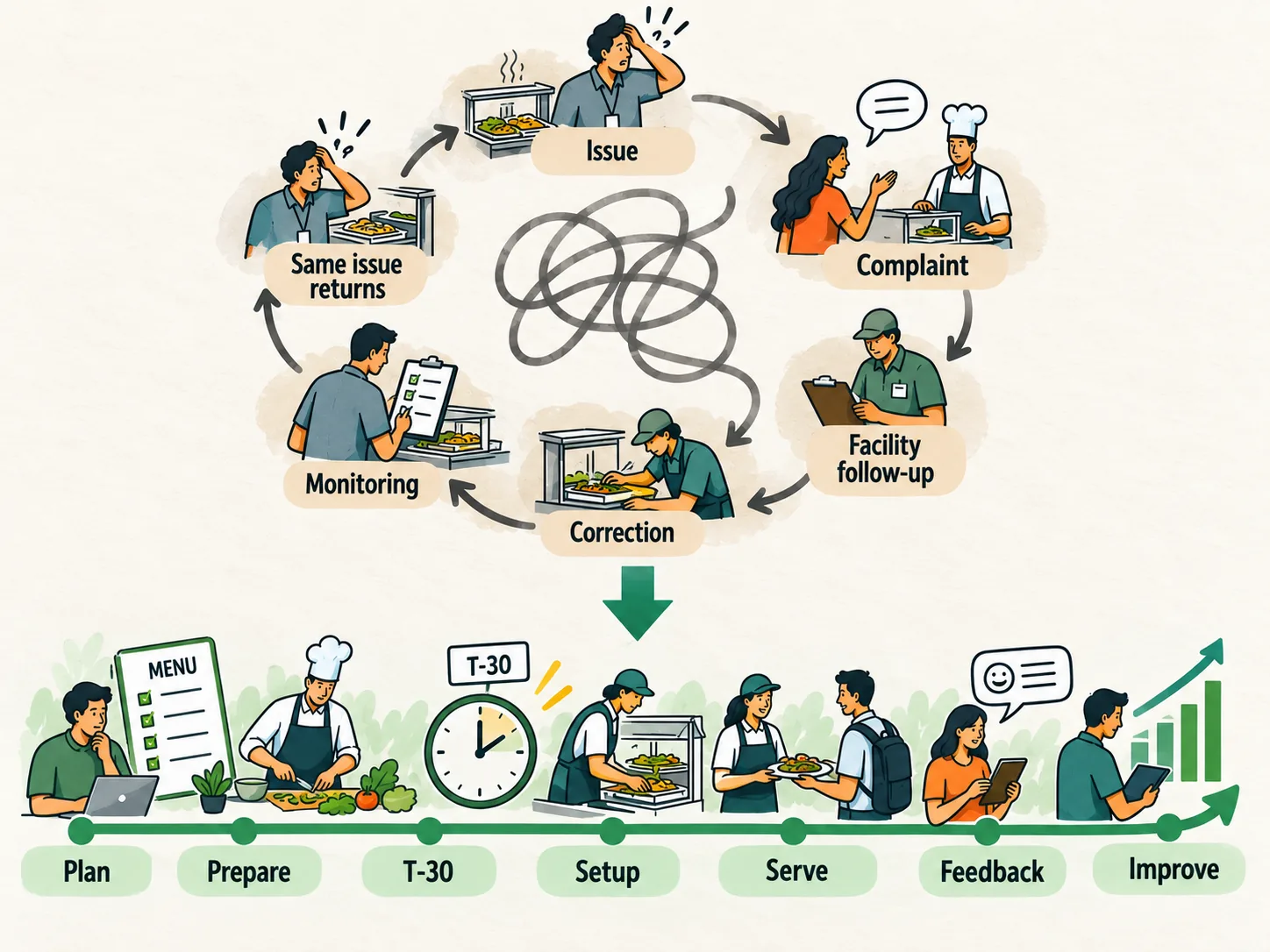
The improvement was not one isolated fix. Several parts of the operation changed together.
The pattern matters more than any single row. Before the intervention, the problems were fragmented — timing might improve while menu variety stayed weak, or presentation might improve while service behaviour stayed inconsistent. After the intervention, those same areas were treated as parts of one operating system.
The strongest evidence of the change is therefore not simply higher sales. It is the combination of more predictable lunch readiness, broader choice, trained service staff, improved presentation and a more structured tuck-shop operation.
What we'd carry forward
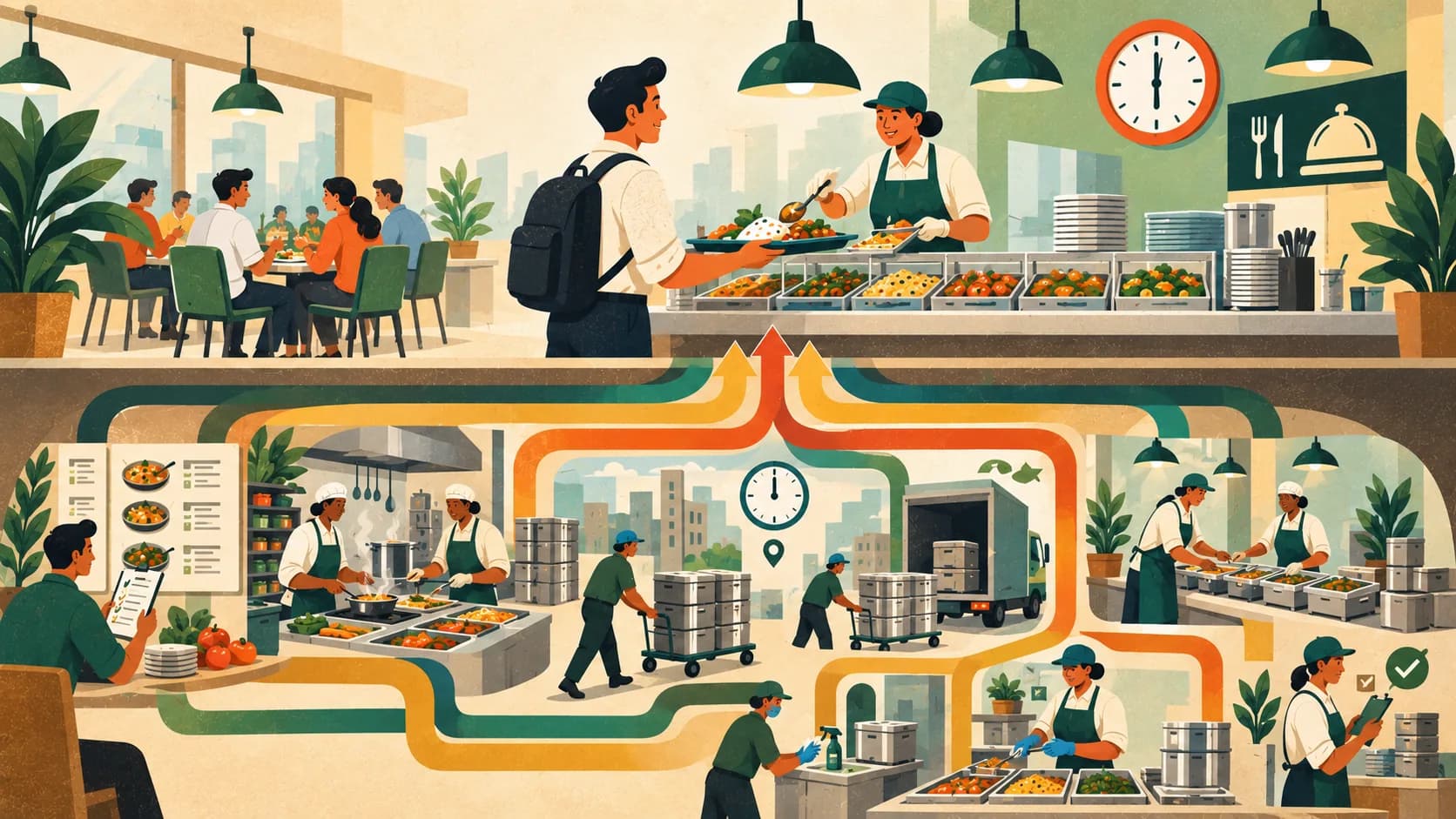
Reliability is not created at 12:30 PM. It is created in everything that happens before 12:30 PM.
Menu planning, preparation, delivery timing, setup and staff readiness determine what employees finally experience at the counter.
The same principle applies to the tuck shop: better assortment and presentation work best when the operation behind them is consistent.
Outcomes
Before the intervention, NetCracker's cafeteria and tuck-shop services were running, but timing, menu choice, quality, presentation and service standards were not consistently predictable.
After the changes, lunch readiness became more reliable, menu variety expanded, service standards were formalised and the tuck shop received both an operational and presentation refresh.
WeCare reports one delayed lunch service across more than 200 operating days.1 Reported lunch sales moved from ₹4,000–5,000 to ₹7,000–8,000 per day,2 while tuck-shop sales reached up to ₹2,500 per day, pending confirmation of the complete range.3 NetCracker also asked WeCare to begin discussions around another site.4
The engagement shows that a more dependable employee food experience starts with a more dependable operating system behind it.
Common questions
How did WeCare improve lunch-counter timing at NetCracker?
WeCare introduced a T-30 process so food reached the workplace approximately 30 minutes before lunch. This allowed the team to complete setup before the 12:30 PM service window.
What changed at the NetCracker tuck shop?
WeCare improved presentation, deployed trained staff in professional uniforms and expanded the assortment with quick bites, sandwiches, juices, healthier choices and greater menu variety.
Did cafeteria sales improve?
WeCare reports daily lunch sales moving from approximately ₹4,000–5,000 to ₹7,000–8,000 after the intervention. The supporting sales records and measurement window should be confirmed before publication.
Was this mainly a menu change?
No. Menu variety was one part of the response. The intervention also covered preparedness, timing, service training, presentation, staff behaviour and ongoing operational feedback.
Notes on the numbers
- Lunch reliability — 200+ operating days; one delayed service reported by WeCare. Source: WeCare operational account information.
[[VERIFY: supporting operating record]] - Lunch sales — reported ₹4,000–5,000/day before versus ₹7,000–8,000/day after. Source: WeCare/client account information.
[[VERIFY: sales records + measurement window]] - Tuck-shop sales — earlier reported ₹300–500/day; post-change sales reached up to ₹2,500/day. Source: WeCare account information.
[[VERIFY: complete post-change range]] - Second-site discussion — reported by WeCare account team.
[[VERIFY: current status before publication]]
Sources
- CBRE — 2025 India Office Occupier Survey, 9 September 2025. cbre.co.in
- Colliers — India Office Snapshot Q2 2026, June 2026. colliers.com
- Colliers — GCCs in India: Global Leadership Through Scale, Competitiveness, Talent & Innovation, July 2026. colliers.com
- Food Safety and Standards Authority of India — Hygiene Requirements / Schedule 4, updated August 2026. fssai.gov.in
Figures marked 1–4 above are WeCare operational data — see Notes on the numbers. Bracketed references [1]–[4] are the external sources listed here.